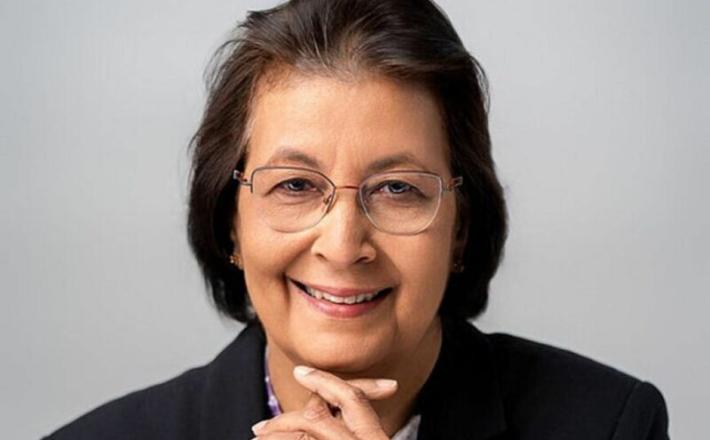
“You will work hard.” That was the promise former medical doctor Jennifer Geerlings-Simons made during her presidential election campaign. It was a phrase equal parts warning and invitation, and now, Suriname, the Dutch-speaking Caribbean nation situated on the shoulder of South America, is set to have her as its first-ever woman president.
In the context of media freedom, identity, and political legacy in Suriname, the weight of this moment is being felt across the nation, to the diaspora beyond, but as any woman in public life knows, “firsts” come with double binds. Geerlings-Simons’ presidency has the potential to be scrutinised not solely through a political lens, but also a gendered one. However, her election is historic not simply because of her gender, but because of what she represents: a country at a crossroads, reckoning with its past and daring to imagine a different future.
A coalition and a chance
Following the general election on May 25, Suriname’s political landscape underwent significant changes. To begin with, no single party secured a majority. However, on May 27, Geerlings-Simons’ National Democratic Party (NDP) — once led by the controversial former president Desi Bouterse — announced a six-party coalition totalling 34 of 51 parliamentary seats, enough for a supermajority and to install her as president.
Geerlings-Simons brings decades of political experience to the role. She has been a parliamentarian since 1996, was a former chair of the National Assembly, and has been the NDP’s party leader since July 2024. Now, at 72, she becomes a symbol of both continuity and rupture — a seasoned insider with an outsider’s promise of dismantling corruption, slimming government excess, and modernising the state.
Full article published here.

Hear from women leading change in the political space share their experiences and insights.

Explore a wide-range of audio-visual resources on key topics of gender equality.

Hear from a diverse list of panelists and guests as they reflect on critical issues pertaining Women in Politics.